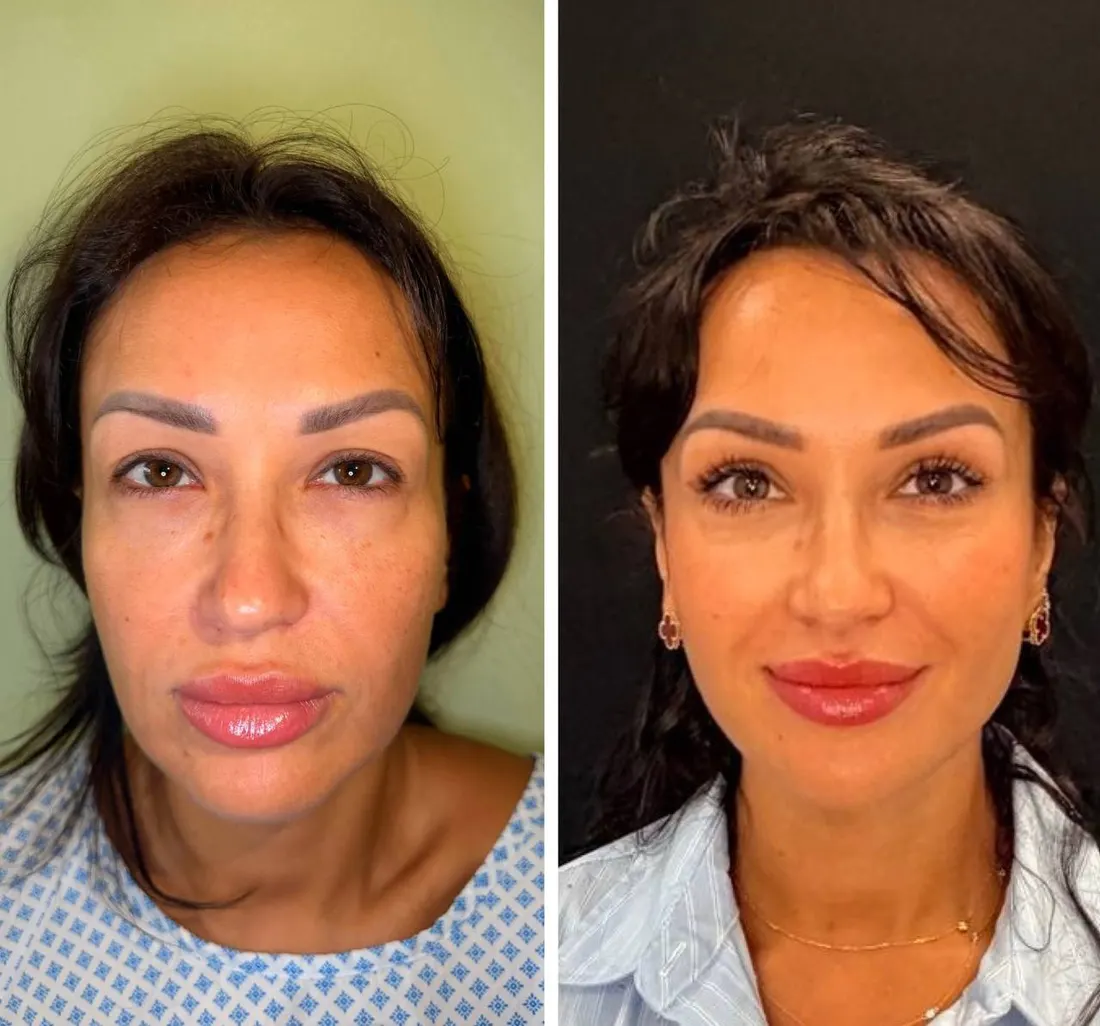
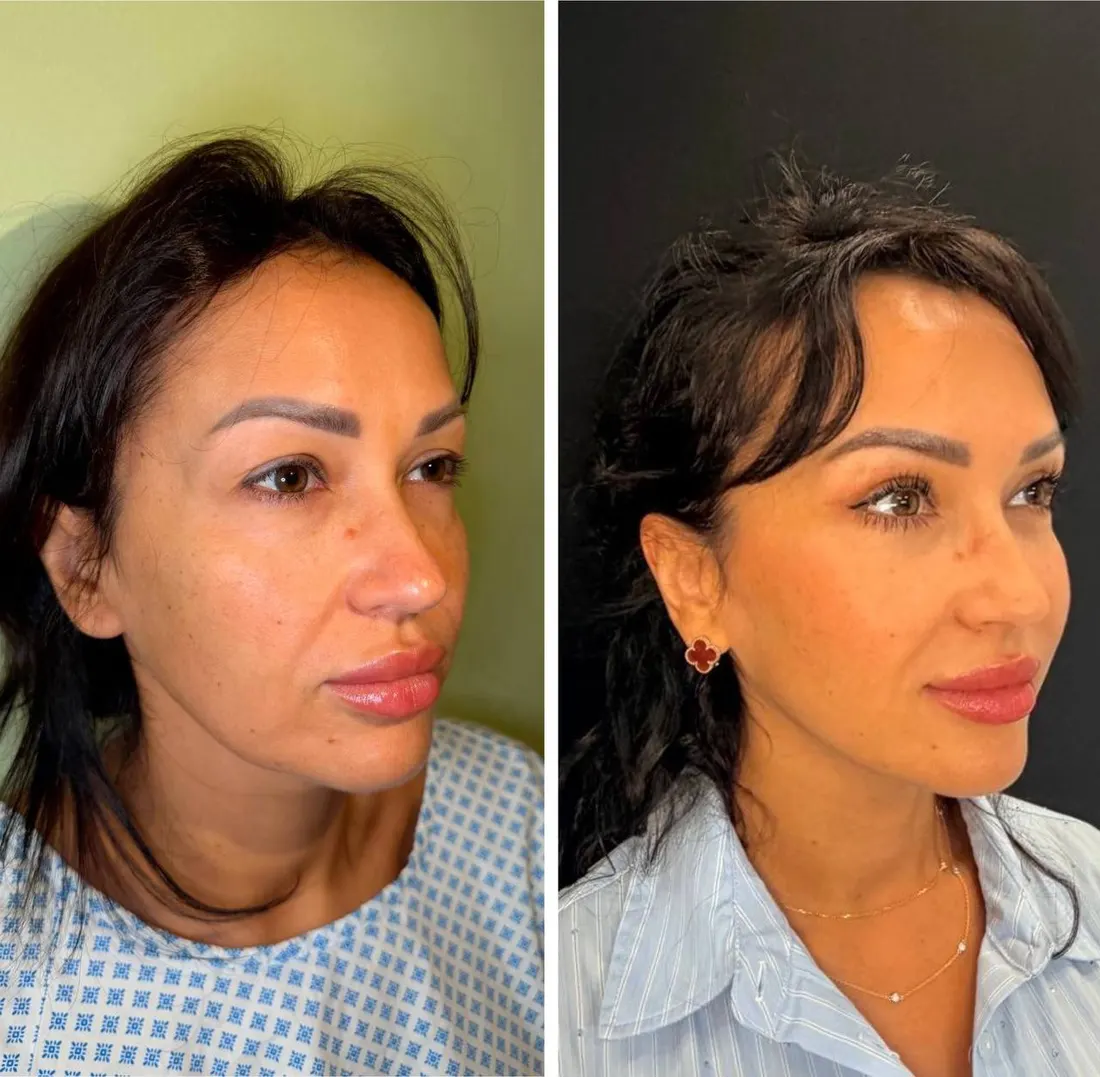
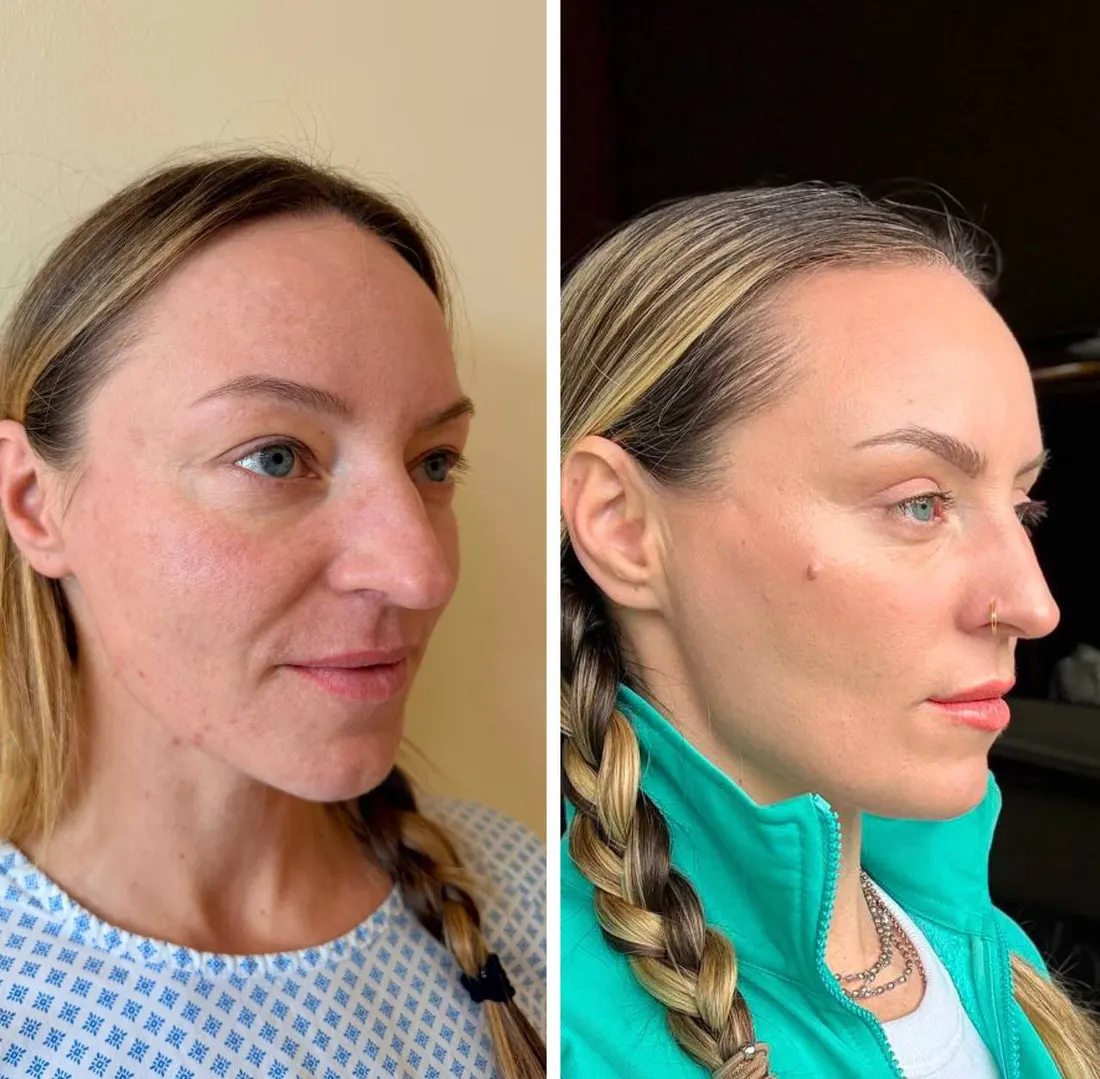
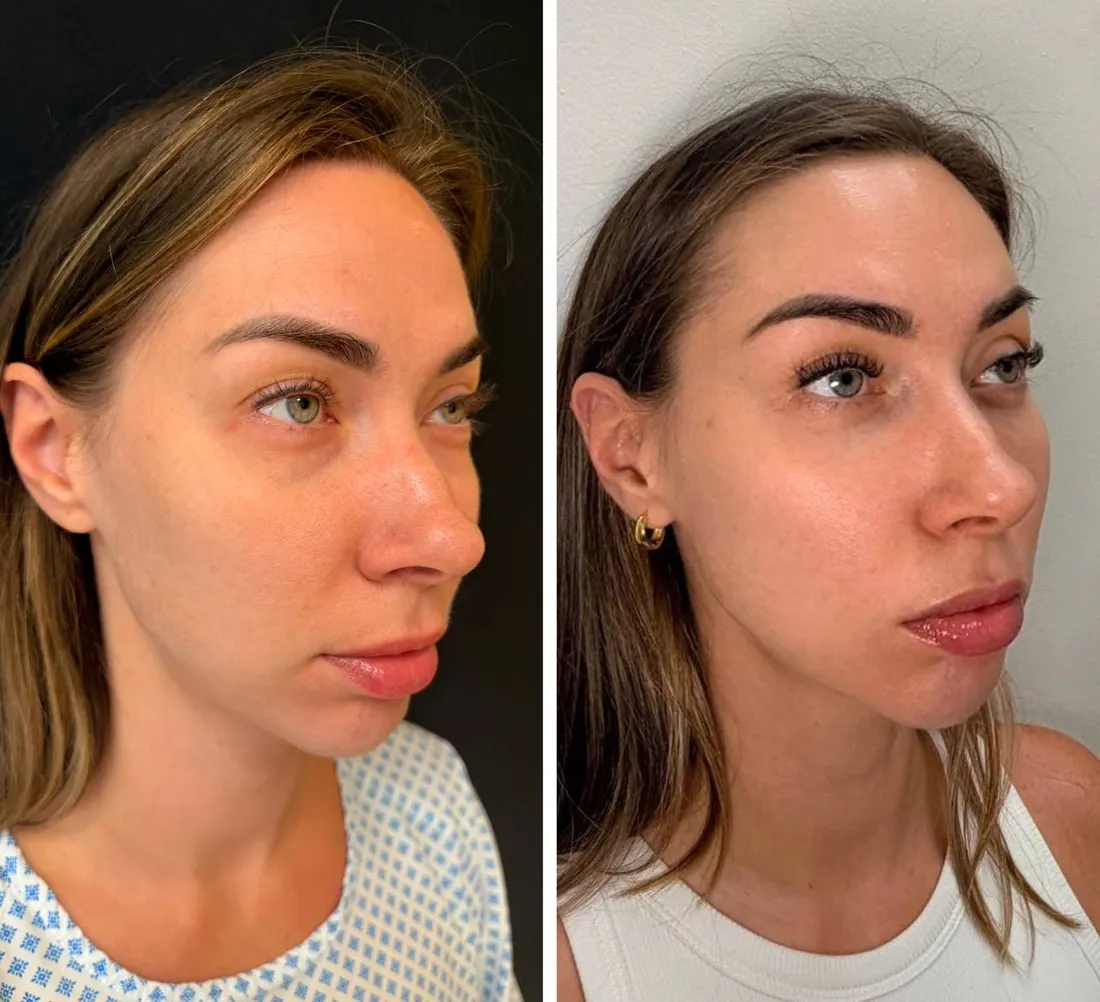
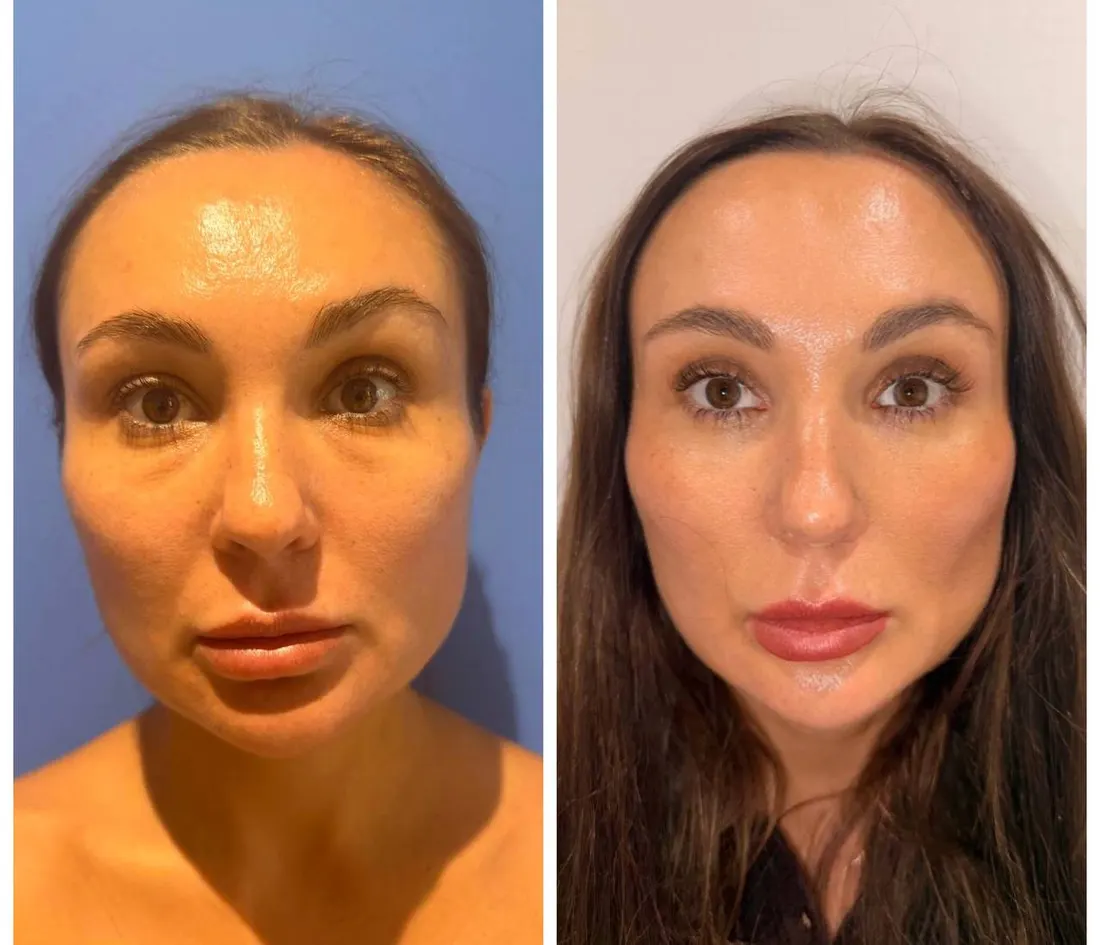
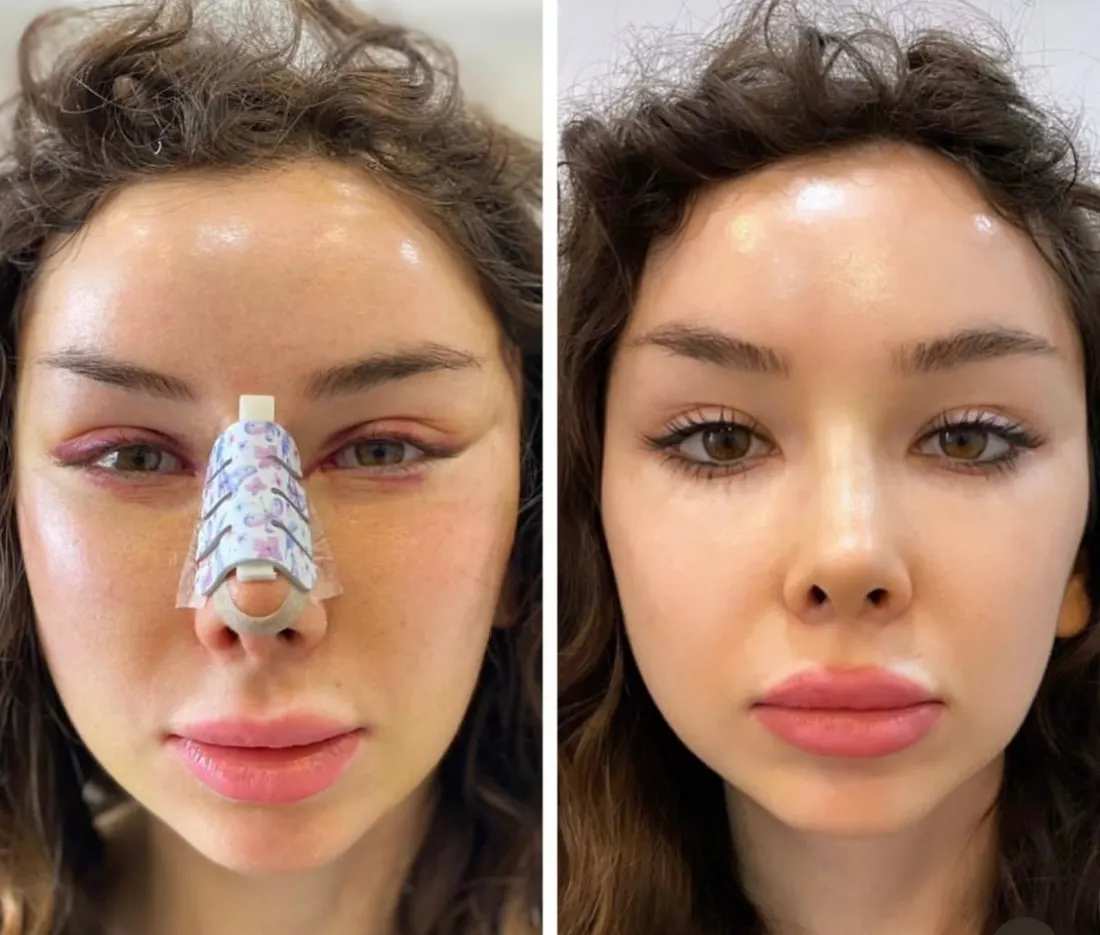
Patients come to blepharoplasty for two reasons. The first is aesthetic: excess upper eyelid skin hoods over the lash line, bags form under the eyes, and the gaze reads as tired even after a full night's sleep. The second is functional: in some patients the eyelid skin hangs low enough to genuinely narrow the field of vision. In that case, the surgery is not about appearance — it's about eyesight.
Dr. Maier performs upper, lower, and circumferential blepharoplasty, as well as the transconjunctival technique (no external incision, access from inside the eyelid) — the approach is chosen for each patient's anatomy, not from a template. At the consultation the doctor looks at eyelid structure, brow position, and tissue volume together: sometimes blepharoplasty alone is enough, sometimes it's worth combining with a brow lift so the result looks cohesive, rather than “eyes done separately from the face”.
The surgery takes place at Gargash Hospital under local anaesthesia with sedation or under general anaesthesia — the decision is made at the consultation based on the scope of the procedure. Hospital admission is usually not required; patients go home on the day of surgery or the next day. Sutures on the upper eyelid are removed on day 5–7, and swelling and bruising normally resolve within 10–14 days — typically enough time to return to everyday life without drawing questions.
It's important to understand the limits of the method: blepharoplasty doesn't lift the brow or remove wrinkles at the corners of the eyes (other procedures address those, which the doctor will discuss separately if relevant). It specifically addresses excess skin and fat pockets on the eyelids. An honest assessment of what your own anatomy will allow is part of the consultation — not something you can work out from a photo online.
The price is quoted at the consultation, right away — no “come in and we'll see”. The doctor holds two licenses, in plastic and in maxillofacial surgery, which for eyelid surgery — and facial surgery in general — means more clinical experience with this specific anatomical area.